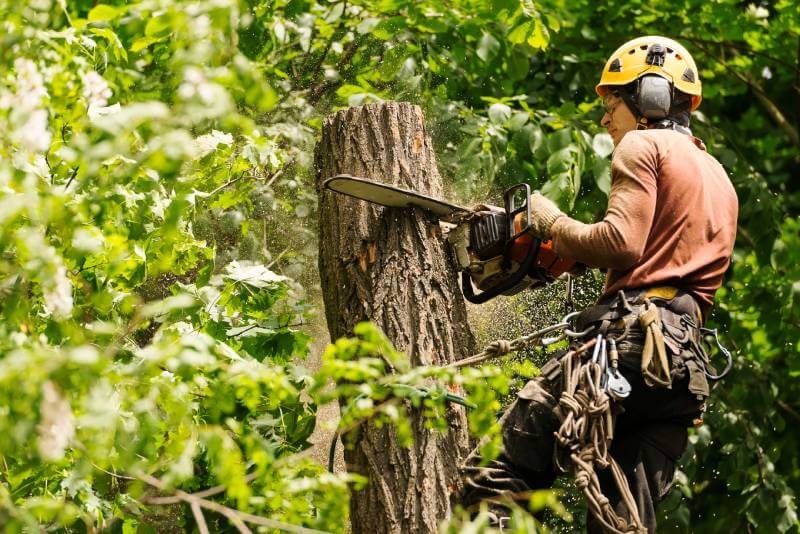
Safe and Efficient Response for Properties in the Greater Atlanta Metro Area
Severe storms are common in the greater Atlanta metro area, often leaving behind fallen trees, broken limbs, and hazardous conditions that threaten homes, power lines, and safety. When a tree is damaged or uprooted, immediate action is crucial to prevent further property damage or injury.
Certified arborists at Jarvis Tree Experts provide professional tree removal services, using specialized techniques to handle these emergencies safely and effectively. Knowing the tree removal warning signs and when it is time to remove a tree can help you act quickly and wisely.
Recognizing Critical Warning Signs After a Storm
Post-storm, inspect your trees carefully for red flags that indicate instability or immediate danger. Common tree removal warning signs include:
- Deep cracks or splits in the trunk or major limbs
- A sudden or significant lean (especially over 15 degrees or toward structures)
- Root plate heaving or lifting from the ground
- Large broken or hanging branches
- Visible decay, fungus, mushrooms, or hollow sections
- Extensive canopy loss or dead branches
These signs often signal compromised structural integrity, making the tree a hazard. In Atlanta’s humid climate and frequent heavy rains, saturated soils exacerbate root failure during high winds. If you spot these issues, avoid approaching the tree—call professionals right away.
The Professional Emergency Tree Removal Process
Certified arborists follow a structured, safety-first approach to emergency removal:
- Rapid Assessment and Safety Setup — Experts arrive promptly (often 24/7 for true emergencies) to evaluate the scene, identify hazards like power lines or structural contact, and establish a secure work zone. They prioritize public and property safety.
- Controlled Dismantling — Using cranes, bucket trucks, ropes, rigging, and advanced cutting techniques, the team sections the tree piece by piece. This method minimizes risk of additional damage to homes, vehicles, or landscapes—unlike risky DIY attempts that can cause chainsaw injuries or further collapse.
- Debris Management and Cleanup — All branches, logs, and debris are removed efficiently. Optional services like stump grinding restore the area fully.
- Post-Removal Evaluation — Arborists check surrounding trees for hidden damage and provide recommendations for prevention or planting.
In Georgia, especially Atlanta, tree removal on private property often requires permits for larger trees (hardwoods 6” DBH+ or pines 12”+). For genuine emergencies (e.g., immediate danger), removals can proceed first with documentation for after-the-fact approval from the City’s Arborist Division.
Why DIY Is Dangerous—And When Professionals Are Essential
Attempting removal yourself is highly risky—storm-damaged trees are unpredictable, with tensioned limbs that can snap violently, and proximity to utilities adds electrocution hazards. Professionals are insured, trained in safety protocols (like EHAP for electrical hazards), and equipped to handle complex scenarios. If the tree contacts a structure, power lines, or blocks access, professional intervention is non-negotiable.
Preventing Future Issues
Regular tree maintenance, including pruning and health assessments, reduces storm vulnerability. Jarvis Tree Experts offers proactive services to strengthen trees before severe weather hits.
Don’t wait for a hazardous tree to cause costly damage. If your property in the greater Atlanta metro area has storm-damaged trees showing tree removal warning signs, or you’re wondering when is it time to remove a tree, contact Jarvis Tree Experts today. Our certified arborists provide fast, reliable tree removal services—keeping your home and family safe.

.jpg)